How to Write a Proposal for a Client
A complete, step-by-step framework for writing client proposals that win deals. Learn how to research the buyer, structure your argument, price with confidence, and deliver a polished document — plus how AI can handle the heavy lifting for you.
Proposals are the highest-leverage document in B2B sales. A well-crafted proposal does more than summarize your offering — it demonstrates that you understand the client's world, positions your solution as the obvious choice, and builds enough trust to justify a purchase decision. Yet most teams treat proposals as an afterthought, recycling the same template with a few names swapped out.
The numbers tell the story: the average sales team spends 20 to 40 hours per proposal, and the average win rate hovers around 25%. That means three out of four proposals end up as wasted effort. This guide breaks down the exact process for writing proposals that stand out — and shows you how to cut the time investment from weeks to hours using AI-assisted workflows.
Research the Client
Every winning proposal starts long before you open a document editor. It starts with research. Your goal is to understand the client's business deeply enough that your proposal reads like it was written by someone who works there — not someone who skimmed their homepage for five minutes.
Start with the basics: what does the company do, who are their customers, and what market do they operate in? Then go deeper. Read their most recent annual report or investor presentations. Scan LinkedIn for the profiles of the people who will evaluate your proposal — their backgrounds, the language they use, and the priorities they signal. Check recent press coverage and industry news for context on what challenges they are facing right now.
What to look for during research
- Business model and revenue drivers — How do they make money? What metrics matter most to them?
- Key stakeholders and decision-makers — Who signs off? Who influences the decision? What are their individual priorities?
- Current challenges and pain points — What problems are they trying to solve? What has failed before?
- Competitive landscape — Who else are they evaluating? What differentiates you in their eyes?
- Timeline and urgency — What is driving their timeline? Is there a fiscal year deadline, a board meeting, or a competitive threat?
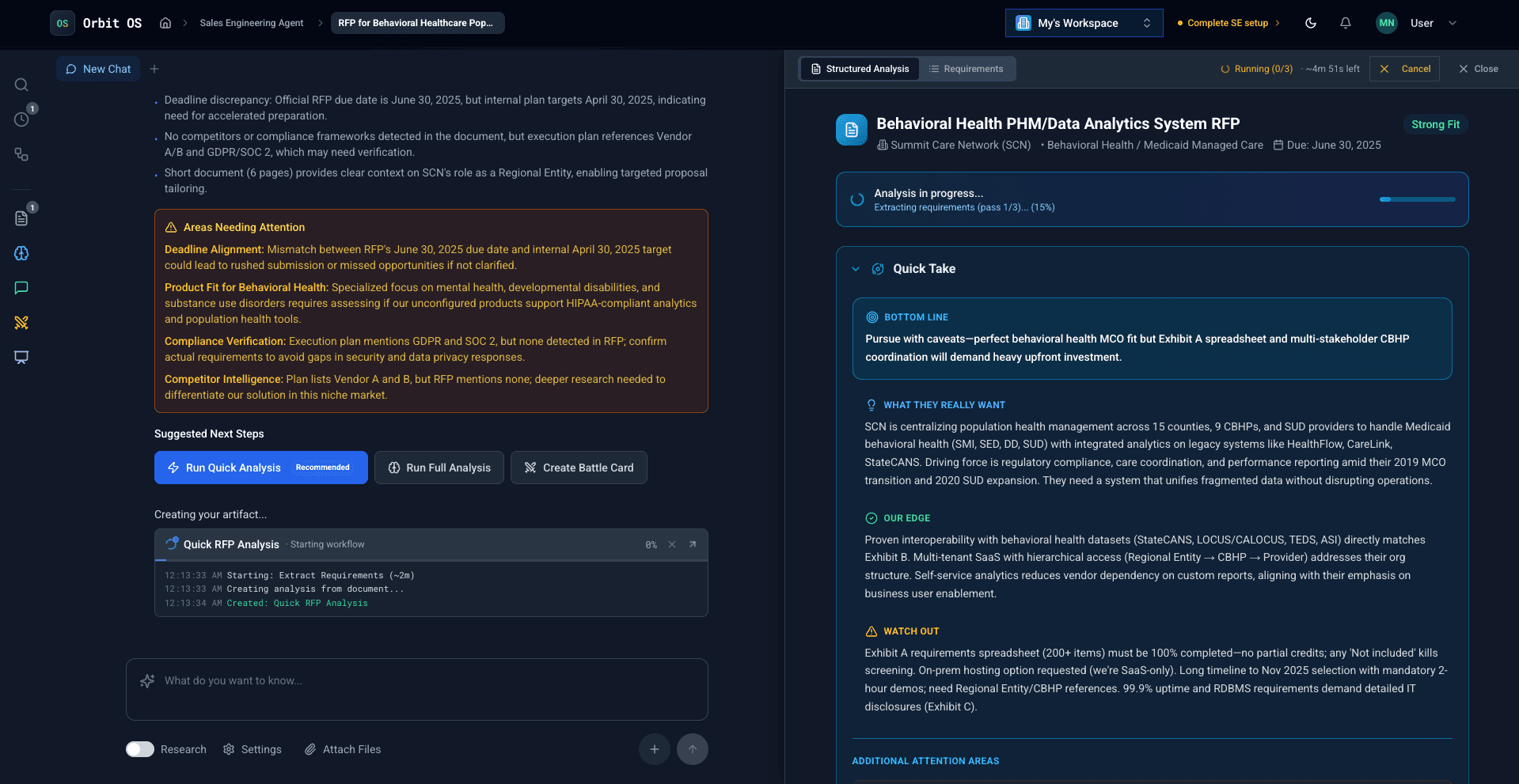
AI extracts requirements, stakeholders, and themes from uploaded client documents.
Analyze Fit and Risks
Not every opportunity is worth pursuing. Before investing 20+ hours in a proposal, take a hard look at whether this deal is a good fit for your team. The most disciplined sales organizations win more by being selective — they pursue fewer deals with higher conviction and a better match between what the client needs and what they can deliver.
A fit analysis should evaluate several dimensions. Do you have relevant experience and case studies in this industry? Can you meet the technical requirements without stretching beyond your capabilities? Is the budget realistic for the scope? Are there dependencies on third parties or technologies you do not control? Is the timeline achievable given your current workload?
Equally important is identifying risks early. A risk that surfaces during the proposal process is an opportunity to mitigate it proactively. A risk that surfaces after you win the deal becomes a project fire. Common risk categories include scope ambiguity, integration complexity, stakeholder alignment issues, and resource availability constraints.
Key questions for your fit assessment
- 1.Do we have at least two reference clients in a comparable industry or use case?
- 2.Can we meet 80% or more of the stated requirements without custom development?
- 3.Is the budget range aligned with the scope of work?
- 4.Are the timelines achievable with our current bench and project pipeline?
- 5.Do we have executive sponsorship or a champion within the client organization?
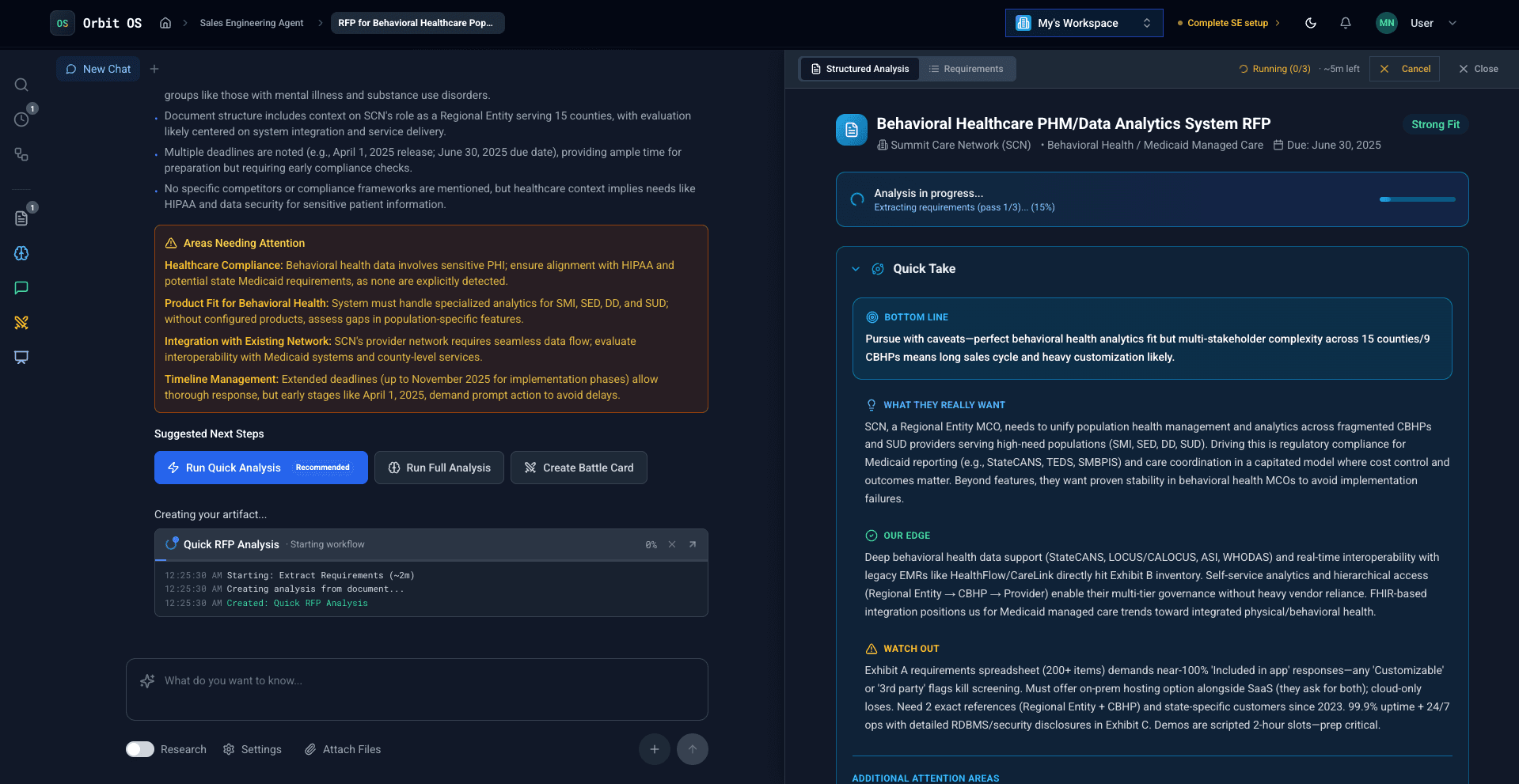
Automated fit scoring identifies strengths, gaps, and risks before you start writing.
Create a Proposal Outline
An outline is the skeleton of your proposal. It determines the flow of your argument, ensures nothing important gets missed, and gives stakeholders a chance to align on structure before you invest time in prose. Skipping this step is one of the most common reasons proposals get stuck in revision loops — the writing is fine, but the structure does not match what the reviewer expected.
A strong proposal outline typically follows this structure, though you should adapt it to the client's RFP format if they have specified one:
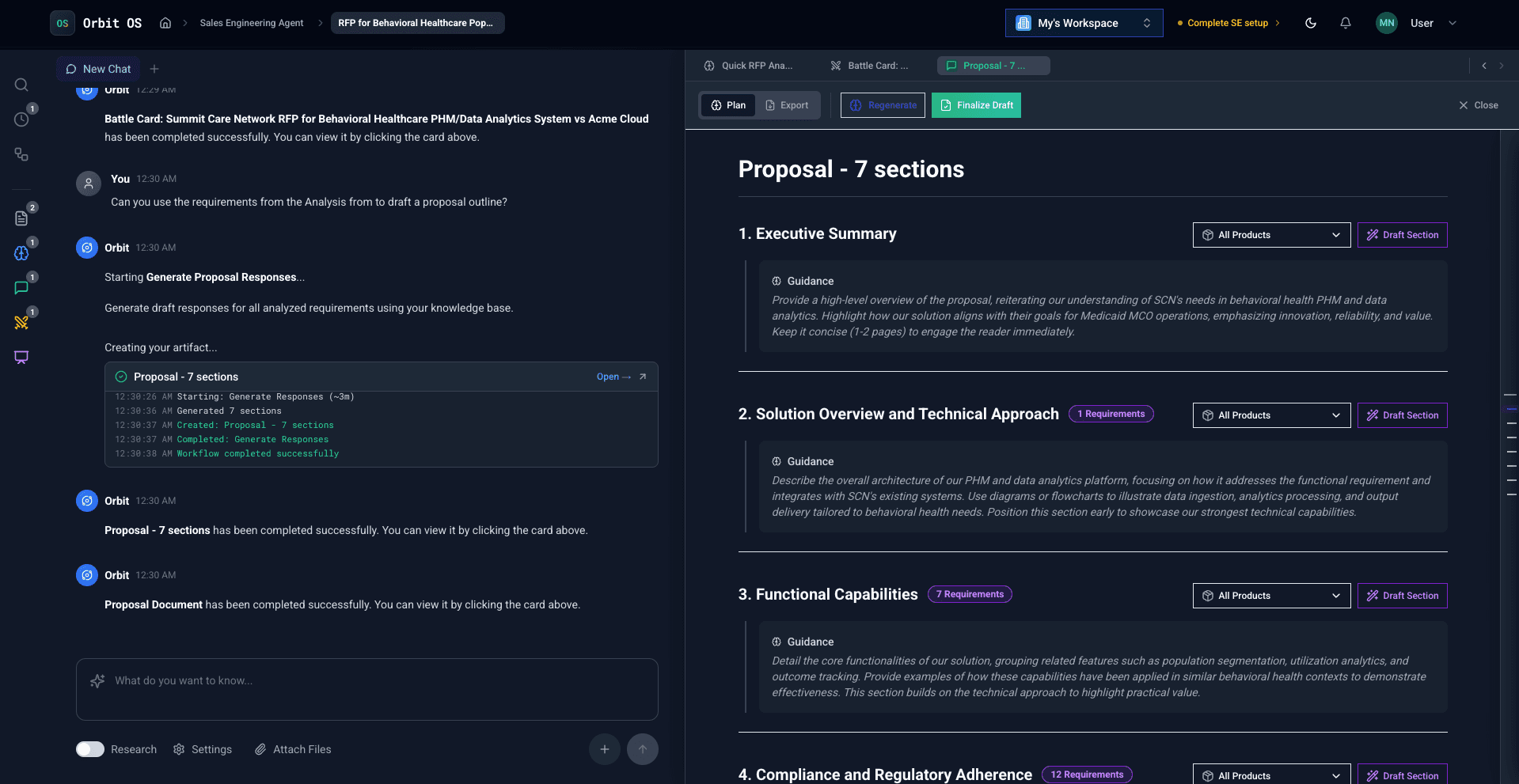
A tailored outline with section-by-section suggestions, mapped to client requirements.
Write Each Section
With a solid outline in hand, it is time to write. The single most important principle: keep every sentence focused on the client, not on yourself. Proposals that read like corporate brochures — "We are a leading provider of..." — get ignored. Proposals that read like strategic plans written for the client's business get read, shared internally, and acted on.
Section-by-section writing tips
Executive Summary
Write this last, even though it appears first. Summarize the client's challenge in their language, state your proposed approach in one paragraph, and highlight 2-3 measurable outcomes they can expect. Keep it to one page. This is the section most likely to be forwarded to the economic buyer.
Understanding of the Problem
Mirror the client's own words back to them. If the RFP says they need to "reduce customer churn by 15%," use that exact phrasing. This section builds trust by proving that you have listened. Avoid generic industry observations — be specific to their situation.
Proposed Solution
Lead with outcomes, then explain the method. Instead of "We will implement a data pipeline," write "You will have real-time visibility into customer behavior within 6 weeks, powered by an automated data pipeline that..." Map every requirement to a specific capability.
Timeline and Milestones
Use a visual timeline or Gantt-style table if possible. Break work into phases with clear deliverables at each stage. Include decision points where the client needs to provide feedback or approvals — this sets expectations for their involvement.
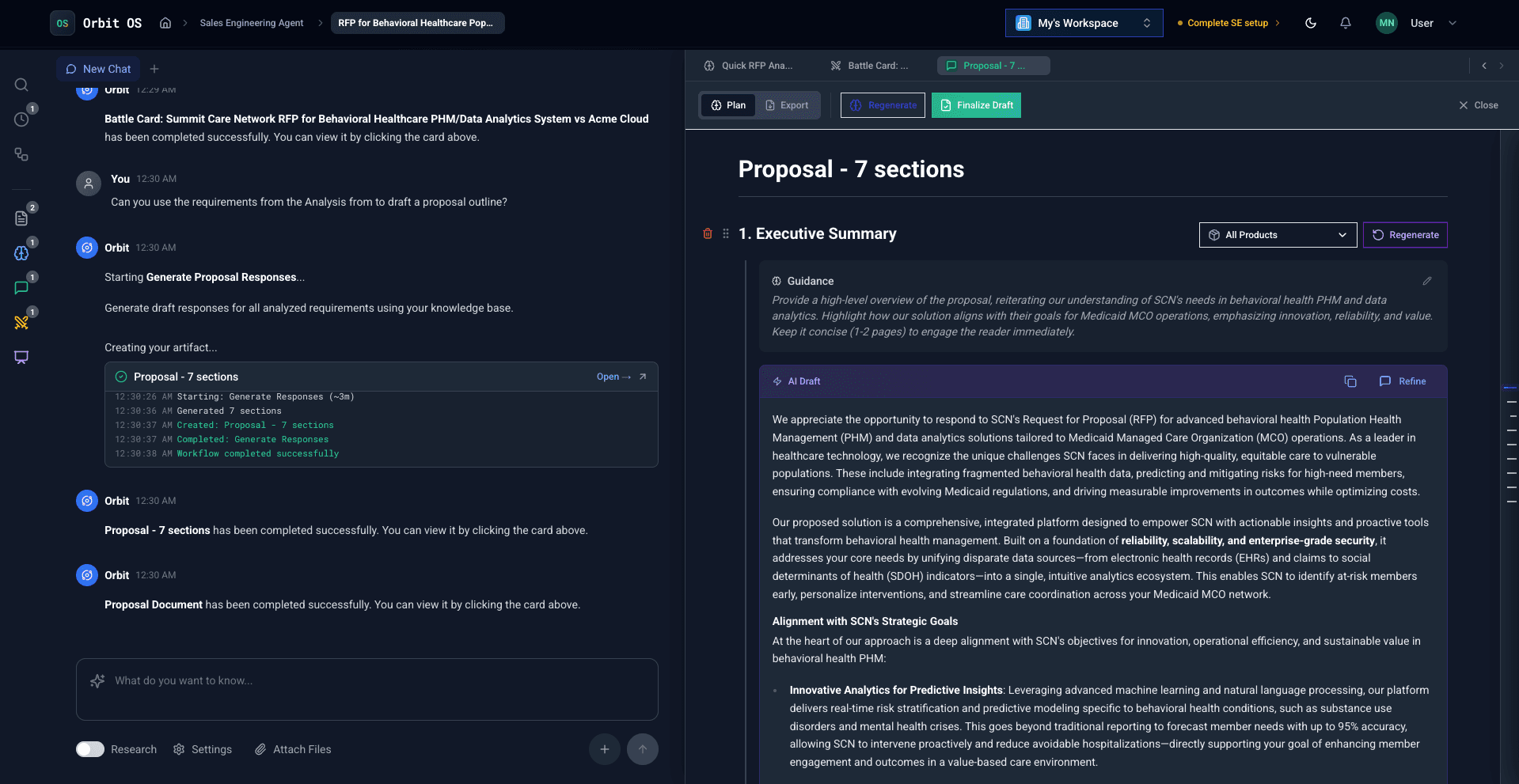
Start from a substantially complete draft that already speaks to the client's needs.
Define Pricing and Terms
Pricing is where proposals often stall. Teams worry about quoting too high and losing the deal, or quoting too low and eroding margins. The solution is not to pick a number and hope — it is to use a pricing structure that gives the client options and aligns cost with value delivered.
Common pricing models
Fixed Price
Best for well-defined scopes with clear deliverables. The client knows the total cost upfront, which simplifies their budgeting. Risk sits with you if scope creeps.
Time & Materials
Best for discovery-heavy or evolving projects. You bill for actual hours worked at agreed rates. Provides flexibility but requires trust and transparency.
Value-Based
Price anchored to the business outcome you deliver, not the effort you invest. Best for engagements where you can quantify ROI — e.g., "This will save $2M annually."
Tiered Options
Offer 2-3 packages at different price points (e.g., Core, Professional, Enterprise). Gives the client a sense of control and often anchors them to the middle tier.
What to include alongside pricing
- Payment terms — Net 30, milestone-based, or a hybrid. State when invoices will be sent and what triggers each payment.
- Scope boundaries — Be explicit about what is included and what is not. This is your protection against scope creep and the client's assurance of what they are paying for.
- Assumptions — Document what you are assuming to be true (e.g., "Client will provide API access within two weeks of kickoff"). If assumptions prove false, they become the basis for a change order.
- Optional add-ons — List services the client might want but that are not part of the base scope. This increases perceived value and creates upsell opportunities after the initial engagement.
Review and Refine
A proposal that goes out with typos, inconsistent formatting, or mismatched numbers sends a clear signal: if this is how you handle a sales document, imagine how you will handle the project. The review stage is where you turn a good draft into a professional, polished deliverable.
Build a review process that catches issues at multiple levels. Do not rely on a single person to find everything — fresh eyes catch what the author's brain auto-corrects.
Internal review checklist
After the content review, run a compliance check. If the client issued an RFP, go through their evaluation criteria line by line and confirm that your proposal addresses each one. Mark the page number where each requirement is answered — some RFPs require a compliance matrix, and even when they do not, building one ensures nothing slips through.
Finally, proofread. Run a grammar checker, but also read the proposal aloud. If a sentence sounds awkward when spoken, it will read awkwardly too. Pay special attention to the client's company name, the names of their stakeholders, and any numbers or dates — getting these wrong is the fastest way to lose credibility.
Export and Deliver
The final step is packaging your proposal for delivery. Formatting matters more than most people think — a beautifully written proposal in a poorly formatted document gets devalued, while a well-designed document creates an immediate sense of professionalism and competence.
Export to PDF for final delivery. PDF preserves your formatting, fonts, and layout exactly as intended, regardless of what device or operating system the client uses. If the client has specifically asked for a Word document (common when they want to annotate or redline your proposal), provide Word as well — but always send a PDF alongside it as the "official" version.
Delivery best practices
- Apply your brand styling consistently — logo, colors, fonts, and footer on every page. The proposal is a representation of your company's quality standards.
- Include a table of contents with page numbers for proposals over 10 pages. Make it easy to navigate — busy executives will jump to the sections they care about most.
- Put the executive summary right after the cover page. Do not bury it behind a table of contents, legal disclaimers, or company boilerplate.
- Write a clear delivery email that summarizes the proposal in 3-4 sentences, highlights the key differentiators, and proposes a specific date and time for a follow-up conversation.
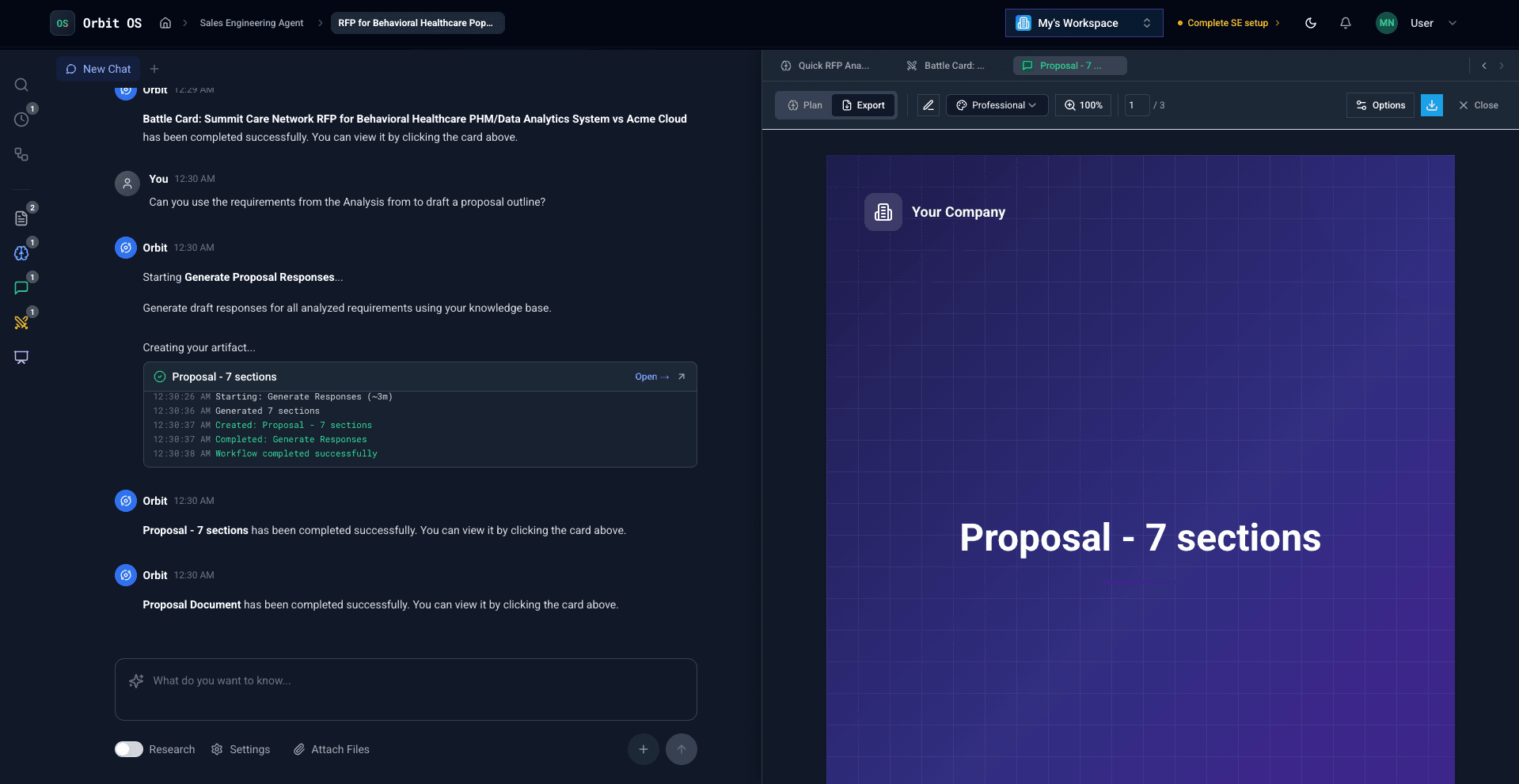
Export your finished proposal to any format with branding applied automatically.
Bonus: Add a Pitch Deck
A written proposal answers the question "what will you do for us?" A companion pitch deck answers the question "why should we believe you?" The two formats serve different purposes and different audiences — the proposal is a reference document for detailed evaluation, while the pitch deck is a presentation tool for live conversations, stakeholder buy-in meetings, and internal champions who need to sell your solution to their leadership.
When delivered together, a proposal and pitch deck create a complete sales package. The pitch deck distills your key messages into 10-15 visual slides that can be presented in a 20-minute call, while the proposal provides the depth and rigor for the evaluation committee that wants to review every detail.
If you want to learn how to create an effective pitch deck, read our companion guide: How to Create a Pitch Deck.
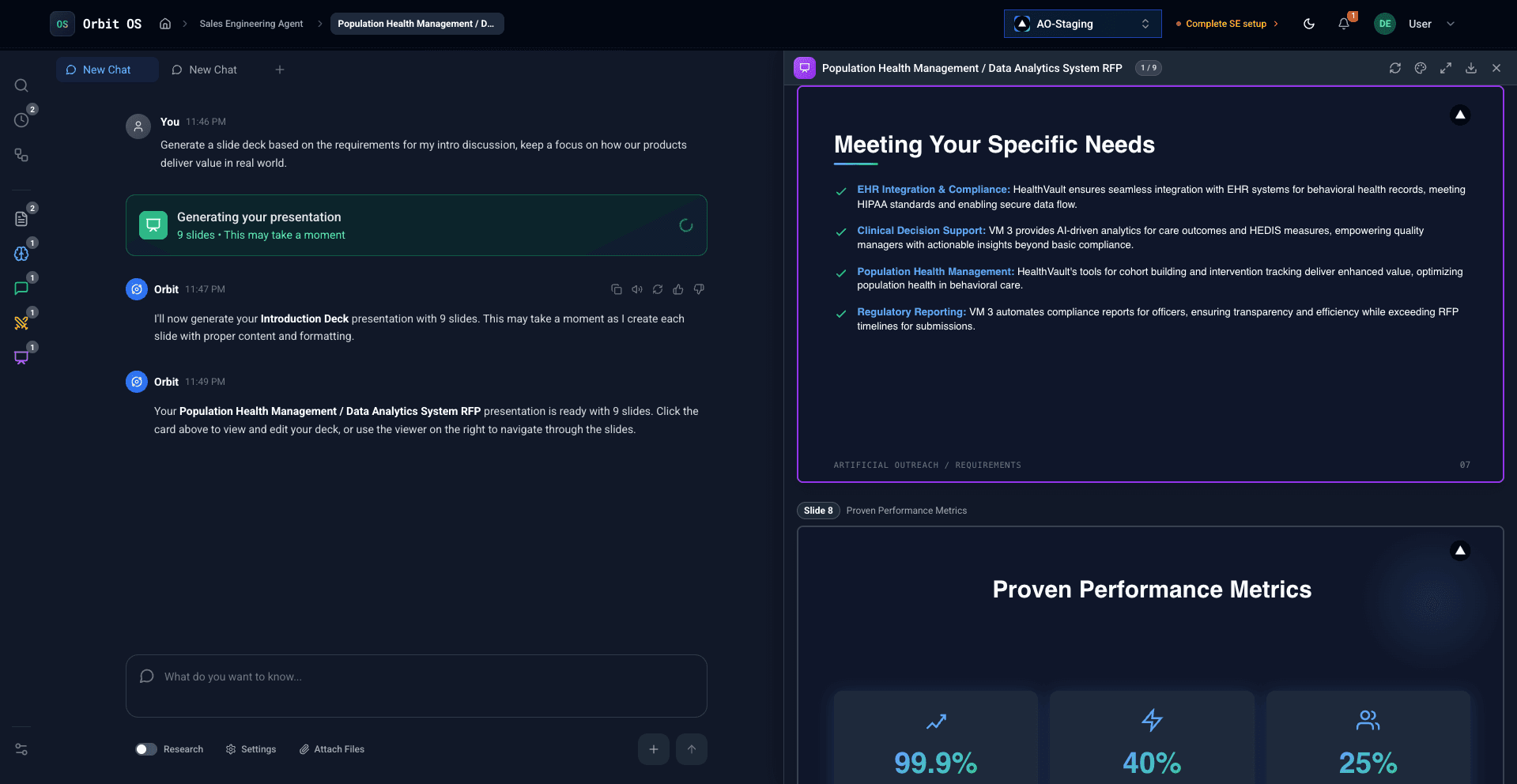
Generate a companion pitch deck from your proposal content with one click.
Let AI Write Your First Draft
Stop spending 20+ hours on proposals. Upload your brief and get a structured, on-brand proposal draft in minutes.
Try the Sales Engineering AgentProposal Writing Checklist
Use this checklist to track your progress before sending any proposal. Every item should be checked off before the document leaves your team.
Frequently Asked Questions
Common questions about writing client proposals.
Most client proposals land between 8 and 15 pages. Simpler projects can be shorter, while complex enterprise deals or RFP responses may run longer. The key is to be thorough without adding filler — every page should earn its place. Focus on the sections that matter most to your client and trim anything that does not directly support your case.
The executive summary. It is often the only section that every decision-maker reads fully. A strong exec summary frames the client's problem, previews your solution, and makes the business case in under one page. If a busy VP only reads the first page of your proposal, that page needs to tell the complete story.
Yes. Transparency builds trust, and omitting pricing creates friction in the buying process. When possible, use tiered options (e.g., Standard, Professional, Enterprise) so the client can self-select the scope that fits their budget. If your pricing truly depends on discovery, include a range or a pricing framework so the client knows what to expect.
Follow up within 2-3 business days. Reference specific sections of the proposal, ask if they have questions about the approach or pricing, and offer to walk them through it on a brief call. Avoid generic "just checking in" messages — add value in every touchpoint by sharing a relevant case study or insight.
AI creates a strong first draft — typically 70-80% complete — that you then refine with your expertise and client-specific knowledge. It handles the heavy lifting of structure, language, and content assembly so your team can focus on strategy, differentiation, and the nuances that win deals. Think of it as a skilled first-draft writer, not a replacement for your judgment.
Focus on quality over quantity. Most high-performing teams find that 4-8 well-researched, tailored proposals outperform 20+ generic ones. Prioritize opportunities where you have strong fit, a realistic path to winning, and an engaged buyer. A lower volume of high-quality proposals also means fewer resources pulled from delivery.
PDF is the standard for final delivery because it preserves formatting across devices. Send a Word version if the client needs to annotate or redline. Always include a branded cover page and a table of contents for proposals over 10 pages. Some teams also attach a one-page summary as a separate file for easy forwarding within the client organization.
Write Winning Proposals in Hours, Not Weeks
Join teams that use AI to research clients, generate outlines, and draft proposals — while they focus on strategy and relationships.